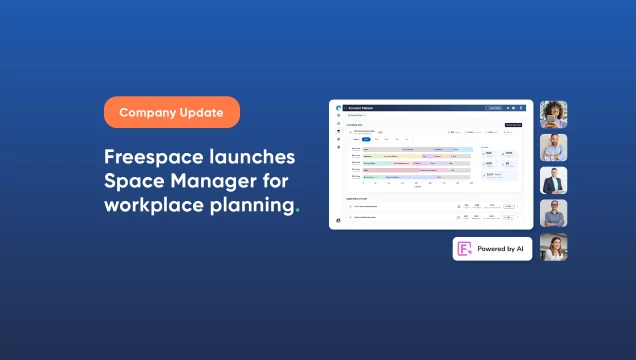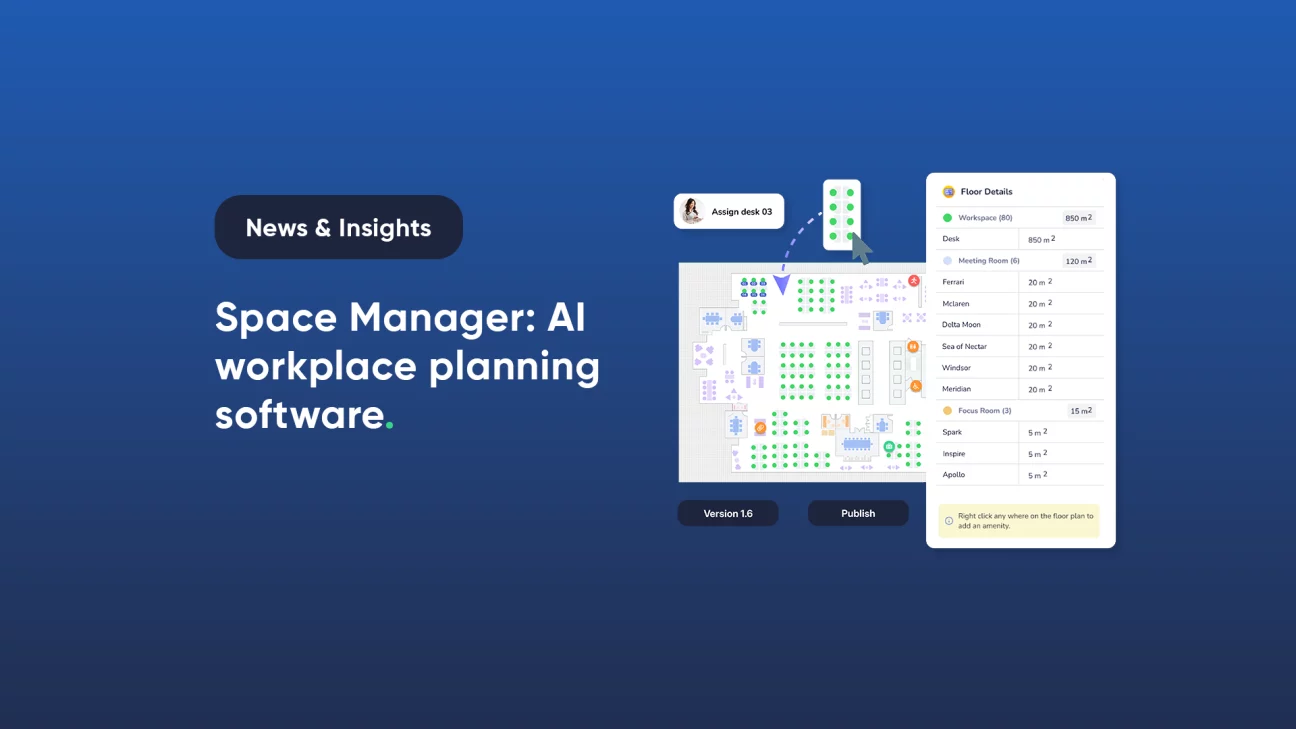
Space Manager turns real office data into plans that people can follow.
Knowing how your office is used is only half the challenge. The real value comes from turning those insights into workplace plans that improve performance and experience.
The gap is wide, CBRE’s 2026 global workplace benchmark found that organizations use 53% of office space on an average day while on peak days, that figure rises to 80%. Mondays and Fridays run close to empty and office costs keep climbing.
However, the tools being used have not kept up, 48% of organizations still analyze space use mainly in spreadsheets. Many others rely on older workplace systems that do not share data. Then, plans reach employees late, or not at all creating frustration.
Space Manager is an AI-powered workplace planning tool. It turns real occupancy data, plus employee and team preferences, into practical plans. Its stacking tools maximizes available space into efficient plans to allow full teams to attend on their specific days in the office.
Here are four benefits of Space Manager, and how each one works.
1. Plan with real data, not guesswork.
Space Manager starts with facts, combining real occupancy data from Freespace sensors, badge access, as well as third party sources. It then adds employee preferences and team requirements on each floor.
Your plan now reflects how people actually use the office and no longer relies on a spreadsheet. The data is sourced from the Freespace Optimize platform, which shows how every space is used. Leaders can then plan around facts and explain every decision with evidence
2. Make space for full teams.
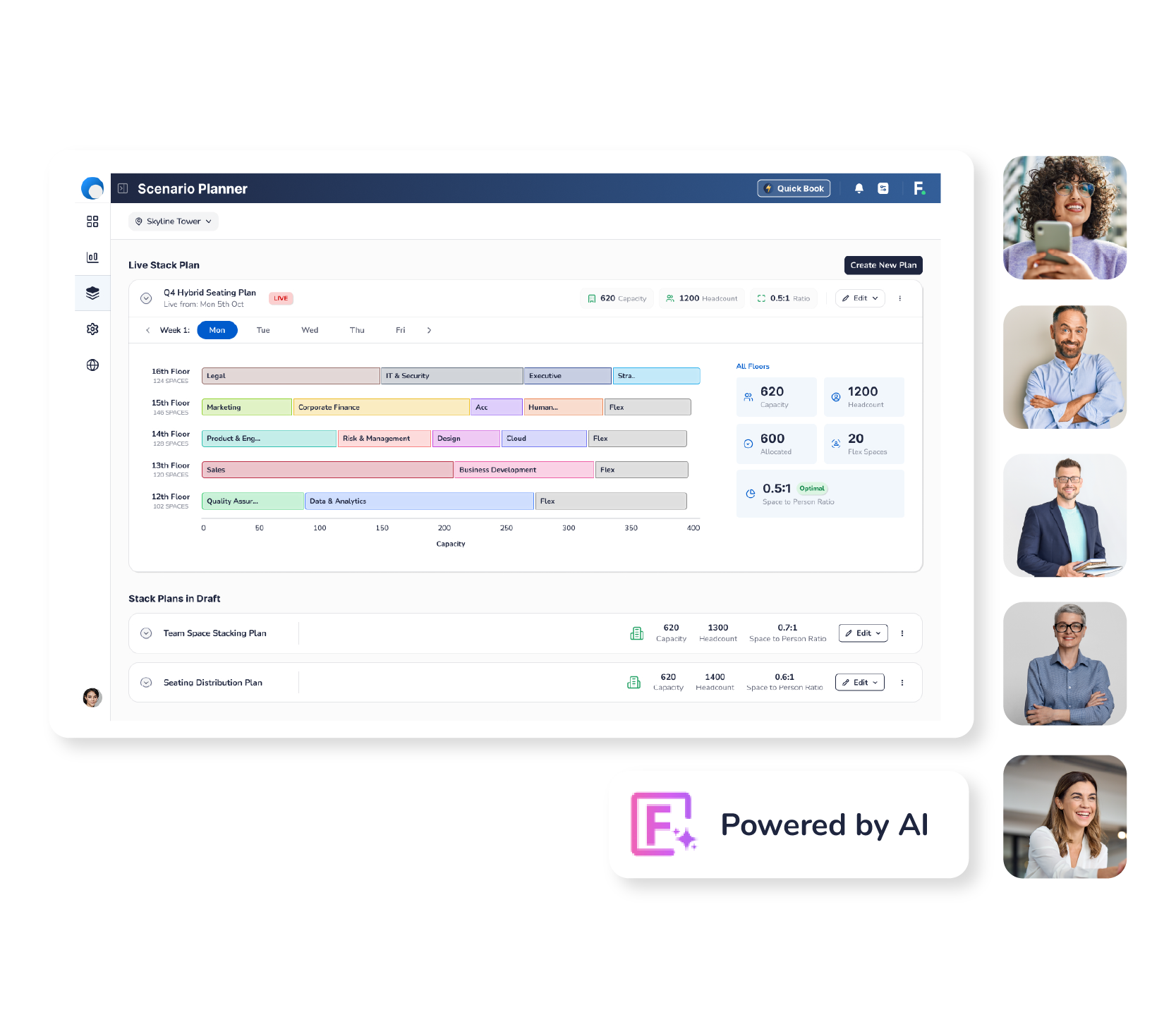
Hybrid teams work best when they are in together. The Dynamic Stacking tool inside of Space Manager balances space in a hybrid schedule for team days to maximizes the space you already have.
Full teams can then attend on their scheduled days, sitting in their own neighborhoods. Space no longer sits empty on quiet days while teams squeeze in on busy ones.
The results show in practice. At a global financial services firm, team co-location rose from 53% to 86% with Dynamic Stacking . This 33-point gain ensures that team members can sit together on their scheduled days. Office days now deliver the collaboration they were intended for.
3. Test the plan before you commit.
The AI planning engine tests layouts, seating plans, and attendance patterns. It measures each one against your business goals including co-location and flexible capacity.
You see the planned changes and potential trade-offs before anyone moves desks then leaders can then choose the option that fits their goals. Every choice comes with the data to explain it.
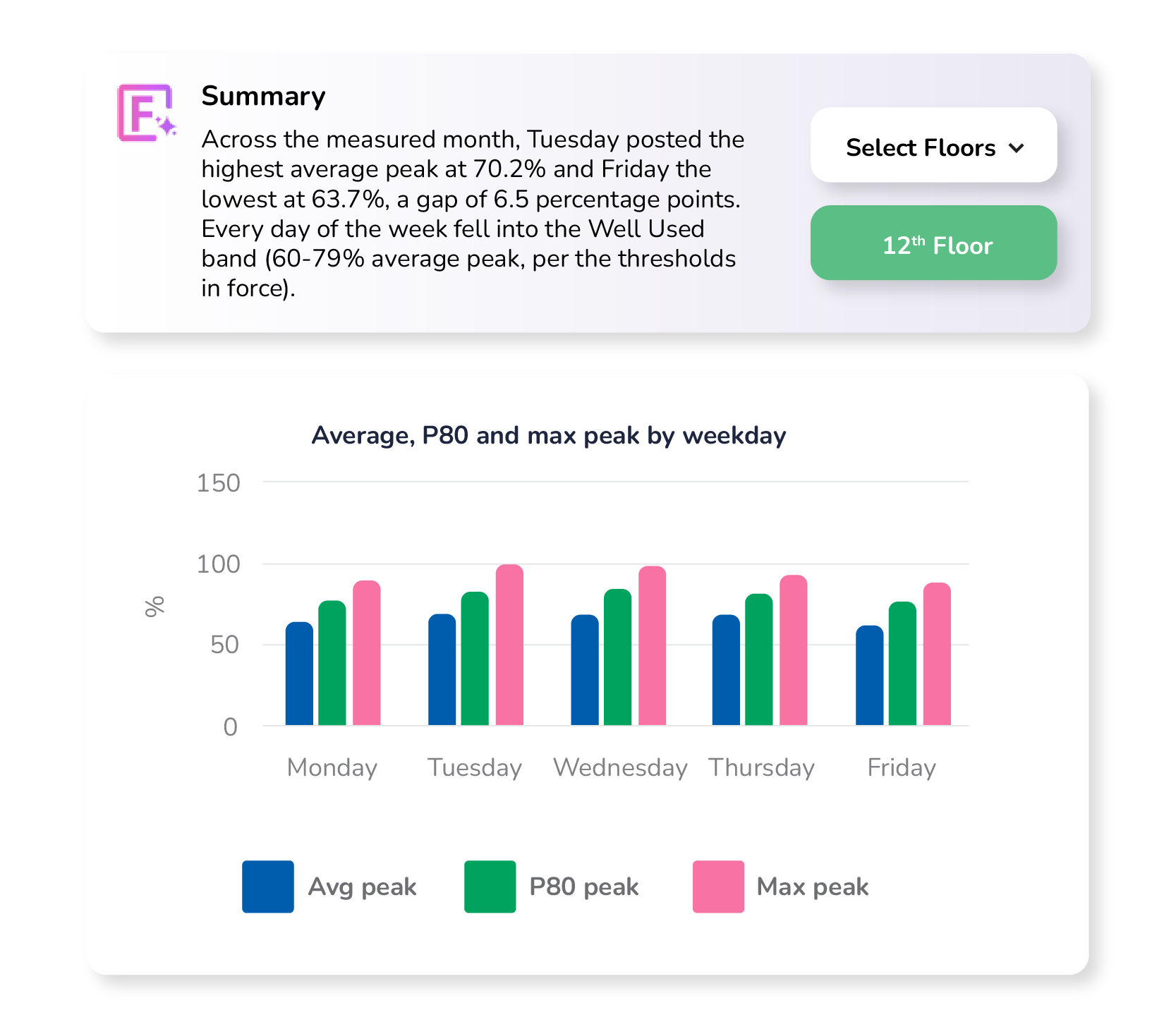
4. Get the plan to your people.
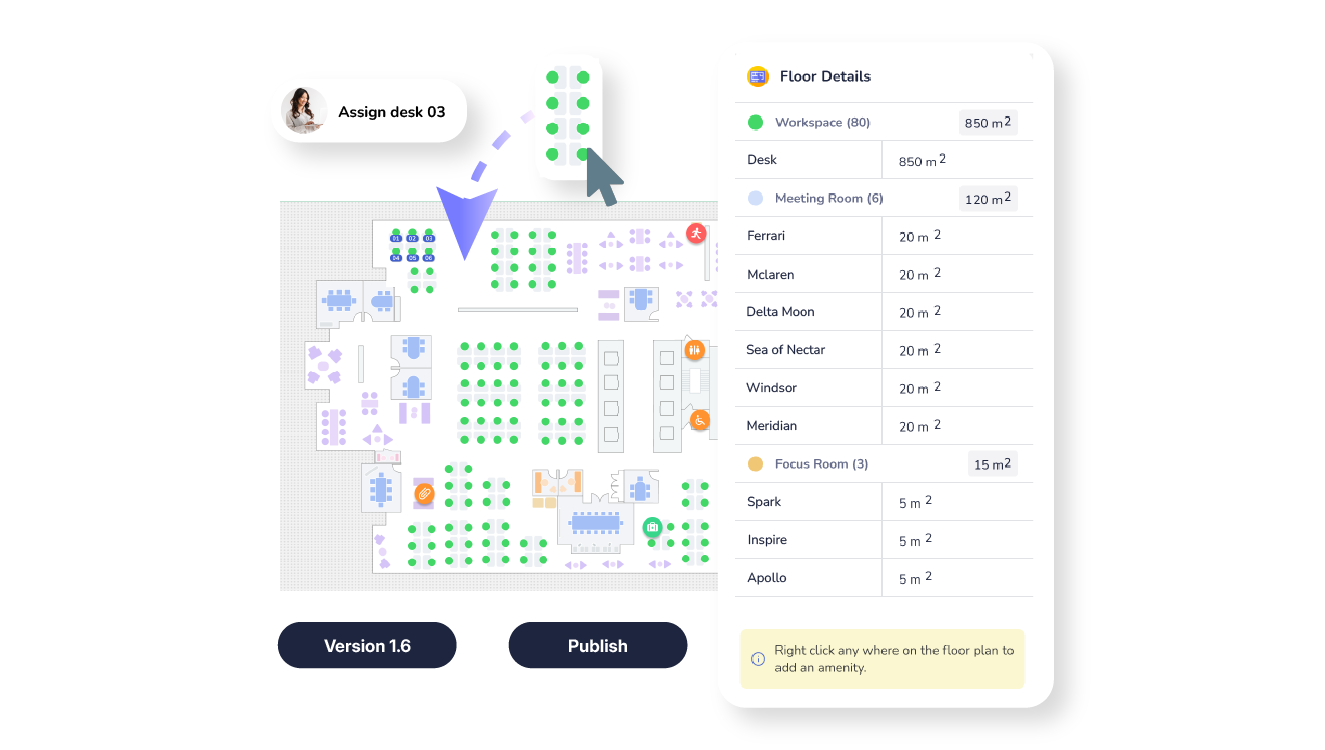
A plan only works when people see it and Space Manager puts the chosen plan into action through the Freespace Engage platform or working with your existing legacy systems. Employees can see their assigned desk, neighborhoods and floorplan changes through the Freespace Experience app and Wayfinding Signage.
Employees know when, where, and with whom they are working. The plan, the app, and signage share one data source, so a change updates everywhere.
One platform, from insight to action.
Space Manager strengthens our Connected Workplace Performance Platform. Optimize reveals how space is used. Manage turns insight into action. Engage connects workplace plans with employees.
All three run on one shared data foundation. Every Freespace product works together to improve workplace performance and experience. Leaders get decisions they can defend.
Space Manager is part of our Manage offer, and it is available now. Give your teams a plan they can follow. Book a demo to see how Space Manager turns your office data into better days.