In today’s hybrid working world, many organizations continue to invest heavily in their office space while simultaneously questioning whether they are truly getting value from that investment.
At the same time, employees have more flexibility than ever before when it comes to choosing where they work. As a result, organizations are facing a new challenge: understanding what makes the office a destination that employees want to go to.
This challenge comes at a time when budgets remain under pressure and real estate decisions are being scrutinized more closely than ever. Workplace leaders are increasingly being asked to justify, both the cost of their space, and the value it delivers to the business.
As a result, when discussing return-to-office strategies, the focus often becomes, “How do we get our people back into the office?” rather than asking a more fundamental question: “What is the purpose of our office, and what would make employees choose to be there?”

The importance of employee experience.
The value of any workplace ultimately comes down to the experience it creates for the people using it. If employees do not see value in being there, the office simply becomes another place to work rather than a destination that supports connection, collaboration, learning, and culture.
A key challenge for many organizations today is a growing disconnect between what leaders believe employees want from the workplace and their employees’ actual lived experience. In many cases, workplaces are still designed for a workforce that no longer exists rather than the workforce we have today.
The workplace has evolved.
Employee expectations have changed.
And, most importantly, the way people collaborate, learn, and connect has shifted.
Yet many organizations continue to make workplace decisions based on assumptions or badge data alone rather than understanding the human behaviours behind how people actually work. And let’s be honest, this approach no longer works.
When employees stop coming together, organizations risk losing more than attendance. They risk losing opportunities for mentorship, connection, learning, and the informal conversations that help shape culture. These moments can be difficult to measure, but they are often some of the most valuable outcomes the workplace provides.
How to unlock true workspace value.
To unlock true workplace value, organizations need to follow the data. But more importantly, they need to ask the right questions.
Workplace data is a critical piece of the puzzle, but it is only one piece. The true value comes from understanding what you are trying to solve, how employees are using the workplace, and the human behaviours that sit behind the data.
Every organization is different. There is no one-size-fits-all workplace strategy because every organization has its own culture, values, goals, and ways of working.
Understanding the story of your office, its purpose, the people it serves, and the experiences it is intended to create is essential to making informed workplace decisions.
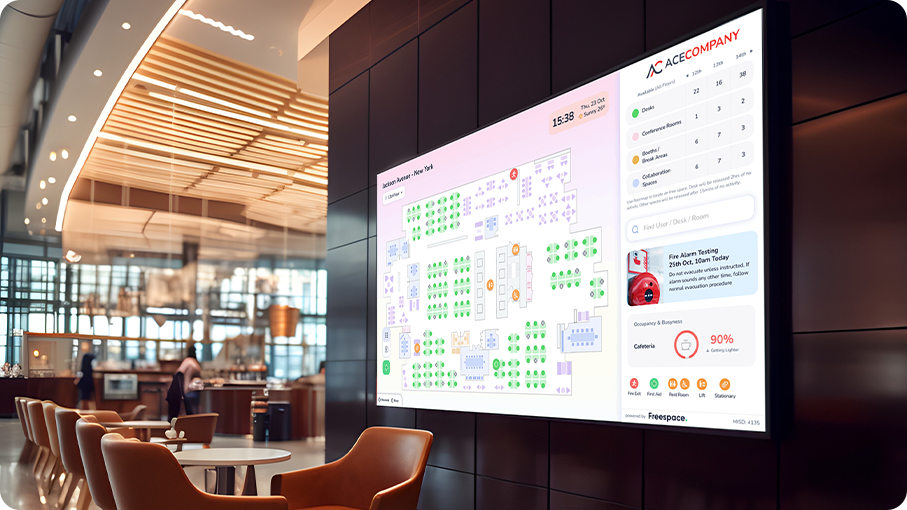
Systems such as the Freespace Intelligent Workplace Management Platform help bridge the gap between people and place by providing visibility into how employees actually use and experience the workplace day to day. The platform helps organizations better understand how employees experience the workplace and identify opportunities for improvement. Often, it is not major investments or large-scale redesigns that have the greatest impact, but rather the small, intentional changes that reduce friction, improve employee experience, and create a workplace that better supports how people want and need to work. This data can help organizations uncover insights that have traditionally been hidden, enabling them to move beyond assumptions and better understand the narrative their workplace is telling. More importantly, it allows them to turn those insights into meaningful improvements, rather than simply generating more reports.

Gaining valuable insights.
Freespace provides such insights by enabling organizations to understand:
- How employees use different types of space by the hour, day, and week: This level of visibility highlights peak usage periods and patterns of sustained use or persistent underuse.
- How long people stay in different environments: These insights help leaders identify which spaces support meaningful work and which are primarily being used for short-term or functional activities.
- Whether employees are using spaces differently than originally intended: For example, collaboration areas may regularly be used for focused work. This can reveal opportunities to better align workplace design with employee.
- Comparative performance across different locations: Cross-site analysis enables leaders to identify trends, best practices, and workplace experiences that consistently drive positive outcomes.
- Workplace trends over time: Capturing the same data over time enables organizations to understand how workplace behaviours evolve alongside changing work patterns, team dynamics, and employee expectations.

Designing workspaces worth showing up for.
These insights make it possible to shape workplaces and workplace strategies based on how people truly behave, rather than how they are expected, or have been instructed, to work. In turn, this enables leaders to make informed, evidence-based decisions that balance employee experience, workplace investment, business objectives, and real estate costs. The goal is not simply to optimize space, but to create environments that employees genuinely see value in using.
Ultimately success lies in recognizing that the workplace is a living ecosystem. And it’s an ecosystem that must evolve alongside the people it supports.
By continuously aligning space with actual human behaviour, organizations can move past the mandate of returning to the office and instead nurture an environment that employees will actively want to be a part of – and indeed – enjoy.
Get in touch today to discover the real behaviours shaping your workplace and see how data-driven insights can help create a better employee experience.